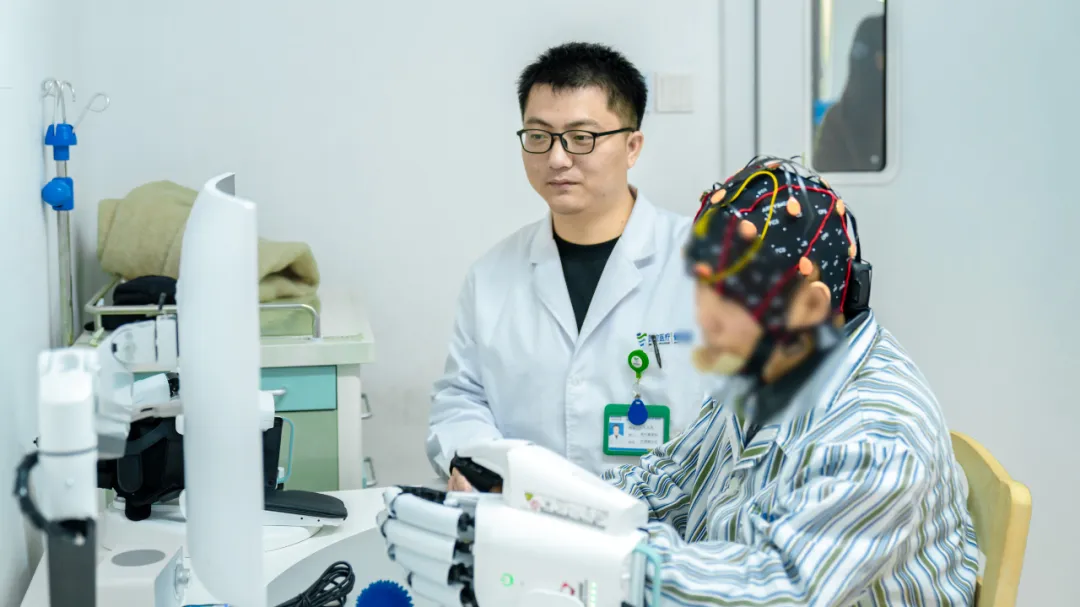
On 5 September 2026, World Spinal Cord Injury Day carries the theme: "From Awareness to Action: Ten Years Advancing SCI Prevention".
Ten years ago, the mission of this day was to "raise awareness". Ten years on, the theme has become "from awareness to action". The shift itself says it plainly: awareness has completed this stage of its mission, and what is needed now is concrete, practical action.
As a rehabilitation group with many years of clinical depth, at JianJia Rehabilitation we have seen how a spinal cord injury can rewrite the life course of patients and their families in an instant.
We know better than anyone: preventing one injury matters far more than treating one.

Understanding Spinal Cord Injury: When the Body's "Information Highway" Is Interrupted
The spinal cord is the vital nerve pathway connecting the brain and the body — like an "information highway" running inside the spinal canal formed by the spine, protected by the bones of the vertebral column.
Spinal cord injury (SCI) refers to damage to the spinal cord caused by trauma, or by tumours, vascular disease, infection, degenerative disease and other conditions, leading to varying degrees of motor, sensory, bladder and bowel and other dysfunction below the level of the injury.

Prevention: From "Knowing" to "Doing"
Spinal cord injury arises from many causes, but road traffic crashes, falls, and certain work- and sports-related injuries leave the greatest room for prevention. The WHO names falls and road traffic injuries as leading causes of traumatic spinal cord injury.
Fastening the seatbelt, following safe practices for work at height, doing a risk assessment before sport, guarding against falls, improving the home environment…
These seemingly small actions can each help lower the risk of injury.
Only by bringing prevention into everyday life can "from awareness to action" truly land.

Technology Breakthrough: Brain-Computer Interfaces Are Redefining the Boundaries of Rehabilitation
Even with the best prevention, accidents can still happen.
The past ten years have also been the decade in which frontier technologies such as brain-computer interfaces moved step by step from the laboratory into clinical exploration.
Among them, the brain-computer interface (BCI) is opening new possibilities for the rehabilitation of patients with spinal cord injury and other neurological impairment.
1. What Is a Brain-Computer Interface?
Traditional rehabilitation mainly relies on compensatory training of the remaining neural function; a brain-computer interface instead tries to build an entirely new "information channel" outside the damaged neural pathways:
- Collect the neural signals related to motor intention;
- Decode these signals with algorithms;
- Convert the motor intention into control commands;
- Drive rehabilitation robots, exoskeletons, functional electrical stimulation or other assistive devices.
Simply put, the patient's brain signal of "wanting to move" is "read" by the device, and then translated into the corresponding movement or training feedback.
In March 2026, China approved the world's first invasive brain-computer interface medical device for market launch. Indicated for patients with tetraplegia caused by cervical spinal cord injury, it assists hand grasp through a pneumatic glove — marking a further step for invasive BCI from clinical research towards clinical application.
At present, brain-computer interfaces are still in a stage of rapid development and clinical validation, and are not suitable for every patient. But from "reading motor intention" to "assisting movement", the technology keeps expanding the boundaries of rehabilitation treatment.
In the future, as brain-computer interfaces merge further with neuromodulation, rehabilitation robotics and other technologies, more possibilities of functional recovery are expected for patients with neurological impairment.
2. JianJia Rehabilitation's BCI Program: Research + Clinical + Academia, a Full-Chain Loop
Facing the brain-computer interface as a frontier rehabilitation technology, JianJia Rehabilitation continues to advance scientific exploration, clinical application and academic cooperation, pursuing the deep integration of frontier technology and clinical rehabilitation needs.
Core technology: rehabilitation outcomes made measurable
Focusing on essential clinical needs, JianJia Rehabilitation carries out independent research and development together with research institutes and top-tier hospitals. The motor-imagery BCI rehabilitation training system co-developed with the participation of Bengbu JianJia Rehabilitation Hospital was officially disclosed on the website of the Anhui Provincial People's Government, precisely targeting the core pain points of stroke rehabilitation.
Validated in controlled clinical trials, the results were significant: stroke patients in the trial improved their motor function by 19% on average. By rebuilding neural pathways driven by intention, it has created a dedicated precision rehabilitation plan for patients with hemiplegia and motor dysfunction, while focusing on core technologies such as non-invasive flexible electrodes and EEG signal decoding, balancing safety with real rehabilitation effectiveness.
Clinical deployment: bringing frontier technology into the rehab ward
JianJia Rehabilitation is moving brain-computer interface technology rapidly from the laboratory to the ward, with several institutions taking the lead in routine clinical application:
Nanchang JianYuan Rehabilitation Hospital: as early as 2023, it put into use one of China's first artificial-intelligence multimodal brain-computer interface platforms, covering patients with stroke, spinal cord injury and more.
Tianjin JianJia Rehabilitation Hospital: in 2025 it successively introduced Tianjin's first "BCI upper- and lower-limb active–passive rehabilitation training system" and a "self-balancing exoskeleton rehabilitation robot", completing the first clinical trials with patients.
Tianjin JianJia TEDA Rehabilitation Hospital, together with Tianjin University's Haihe Laboratory of Brain-Computer Interaction and Human-Machine Integration and Xiangyu Medical, jointly built a brain-computer interface rehabilitation centre and a dedicated BCI ward, integrating top research achievements with clinical rehabilitation and becoming a leading regional centre for BCI rehabilitation.
Academic platforms: clinical-research integration that speeds up translation
On 24 October 2025, Beijing JianJia Rehabilitation Hospital — the flagship hospital of JianJia Medical Group — successfully held a brain-computer interface academic symposium and the unveiling ceremony of its Brain-Computer Interaction Rehabilitation Centre, joining hands with Shanghai University's Brain-Computer Engineering Research Center to launch school-enterprise cooperation and form an expert think tank of neurorehabilitation plus engineering technology, creating a closed loop in which "clinics raise needs, research tackles the technology, and clinics verify the outcomes".
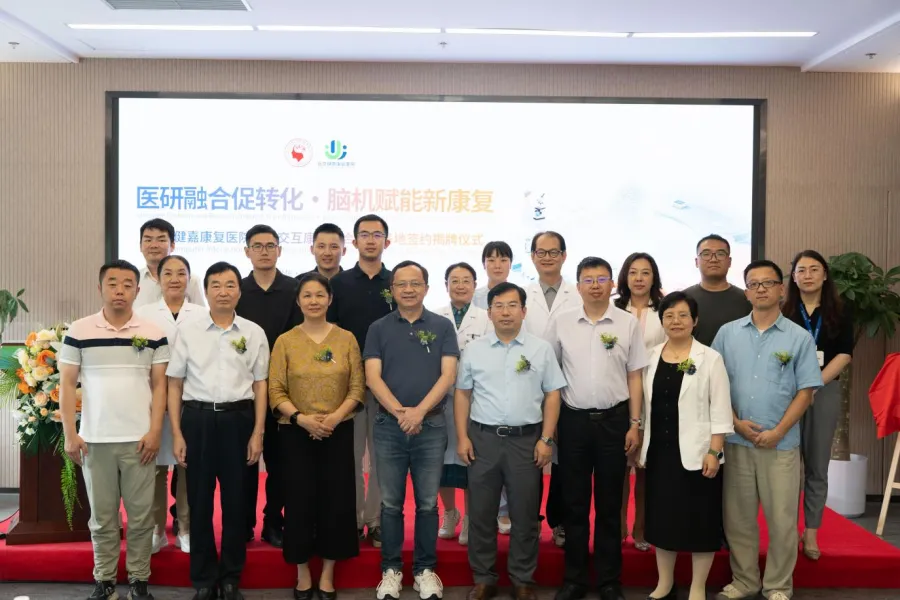
On 26 August, the unveiling ceremony of the "Brain-Computer Interaction Rehabilitation Joint Application Base" of Beijing JianJia Rehabilitation Hospital was successfully held in Beijing. The hospital signed a strategic cooperation agreement with the Beijing Key Laboratory of Intelligent Brain-Computer Interaction and Neuromodulation, and the two sides jointly unveiled the base.
A nationwide clinical trial of brain-computer interfaces — jointly launched by Peking University First Hospital and JianJia Rehabilitation to recruit participants — is also under way.
JianJia Rehabilitation has always believed that the value of technology ultimately lands on each patient's concrete functional improvement and quality of life.
From awareness to action — ten years is a long time.
But for every patient and family who has experienced, or is living through, a spinal cord injury, these ten years are made of countless concrete days: every training session, every act of persistence, every small accumulation of progress.
JianJia Rehabilitation is willing to be — and has always been — a fellow traveller on this road.
Prevention starts today; as for rehabilitation, let us persist together.
References
- ISCOS — World Spinal Cord Injury Day 2026: From Awareness to Action: Ten Years Advancing SCI Prevention (iscos.org.uk)
- WHO — Spinal cord injury fact sheet (who.int)
- American Spinal Injury Association — International Standards for Neurological Classification of Spinal Cord Injury (asia-spinalinjury.org)
- National Medical Products Administration (China) — World's first invasive brain-computer interface medical device approved for market launch, March 2026 (nmpa.gov.cn)
Individuals differ. This article is for general health education only and is not a substitute for medical advice. If you feel unwell, please visit a hospital. Some images in this article come from the internet; please contact JianJia Rehabilitation for removal.